

The Bible says that without faith, it is impossible to please God (Hebrews 11:6). And that "Whatsoever is not of faith is sin" (Romans 14:23). We understand that as believers, we "walk by faith, not by sight" (2 Corinthians 5:7). And we are instructed to add to our faith (2 Peter 1:5) and to build up ourselves on our most holy faith (Jude 20).
Because it is impossible to please God without faith, it is vital that we get this issue right. We need to know what faith is and what faith is not so that we can know with certainty whether we have it.
What faith is not:
Faith is neither magic nor a means of controlling or manipulating God or the supernatural. What is happening with this line of thinking is humanity wrestling with the absolute sovereignty of God and our absolute weakness in light of it. In pagan mythology, the gap between the gods and humanity is bridged by rituals such as dancing, fasting, and making sacrifices. Unlike in the Bible, where we do this to acknowledge the holy otherness of God, the pagans did this as a way of controlling their gods. John Oswalt, in his book The Bible Among the Myths, notes the following regarding pagan worship, "To accomplish something in the natural or divine realms is a matter of doing a similar thing in this human realm." He is speaking here of what is known as "continuity." Continuity is "the belief that there is no distinction between symbol and reality; the symbol is the reality... the visible world is only a reflection of the invisible, divine world, but as its reflection, it is identical with it."
He goes on to say that, "continuity serves both an intellectual and a practical function. If this world and the other world are continuous, then we can affect that other world by what we do here. We are not helpless; we can act out what we want the gods to do and it will be done, not because they must do it, but because in our very actions they are doing it. They and we are one. This oneness is always potentially so, but the performance of certain rituals, themselves expressive of continuity, reinforces the reality."
Thus, in pagan mythology, getting what you want is "a matter of learning the right techniques. If you perform the techniques in the right way, then the desired results must follow." In other words, if they could only dance the right way, say the right things, or offer up a sacrifice worthy enough, they could get what they wanted from their gods. They could manipulate the supernatural. They were not subject to a force greater than themselves, but they were an extension of that force. They are not subject to the sovereignty of their gods, but they participate with them in their sovereignty. Sadly, pagan mythology has crept into the Church in the form of bad teachings surrounding faith. Like the pagans, many are uncomfortable with the absolute sovereignty of God, so they flatter themselves into thinking as pagans once did, that they can control and manipulate the supernatural and thus participate in the sovereignty of God instead of being subject to it.
No, we don't have rain dances, but we do have preachers who preach shouting as a means of manipulating the supernatural and fasting as a way of twisting God's arm. We have books like The Circle Maker by Mark Batterson, which takes a story steeped in Jewish Mysticism and baptizes it for a Christian audience. The story is of Honi, the so-called "Circle-drawer," who, as legend has it, while in the middle of a drought, drew a circle on the ground, stepped into it, and then declared to God that he would not leave the circle until God sent rain. His God, too small to resist Honi's childish antics, opened up the heavens, and rain began to fall. Batterson teaches that Christians should do as Honi did. Tell God what you want, and don't give in until you get it. Draw a circle around your dreams, needs, or goals, and don't give up until God gives you what you want. Batterson is not a man of great insight or great faith; he is a fool. Many believe that witchcraft is "dark magic" and that faith is "Good or holy magic." Thus if you have enough faith, you can participate in the supernatural and experience signs, wonders, and miracles. If you don't, you can't. This is not faith. This is faith in faith, practical paganism, and an unfront to God.
The consequences of getting faith wrong:
Before we proceed, it's important to underscore that this is not merely a theoretical issue. There are real consequences to misunderstanding faith. Let me share a deeply personal story vividly illustrating the peril of misunderstanding faith. In 1978, my Grandfather, Wayne Odum, was diagnosed with cancer. He was the Pastor of a Oneness Pentecostal Church in Dayville, CT, the husband of a wonderful lady, and the father of twelve children, eleven living. The news was devastating. But my Grandfather was a man of great faith and believed God could heal him. So, too, did the wonderful people of God who knew him. Prayers went up everywhere on his behalf, but healing did not come.
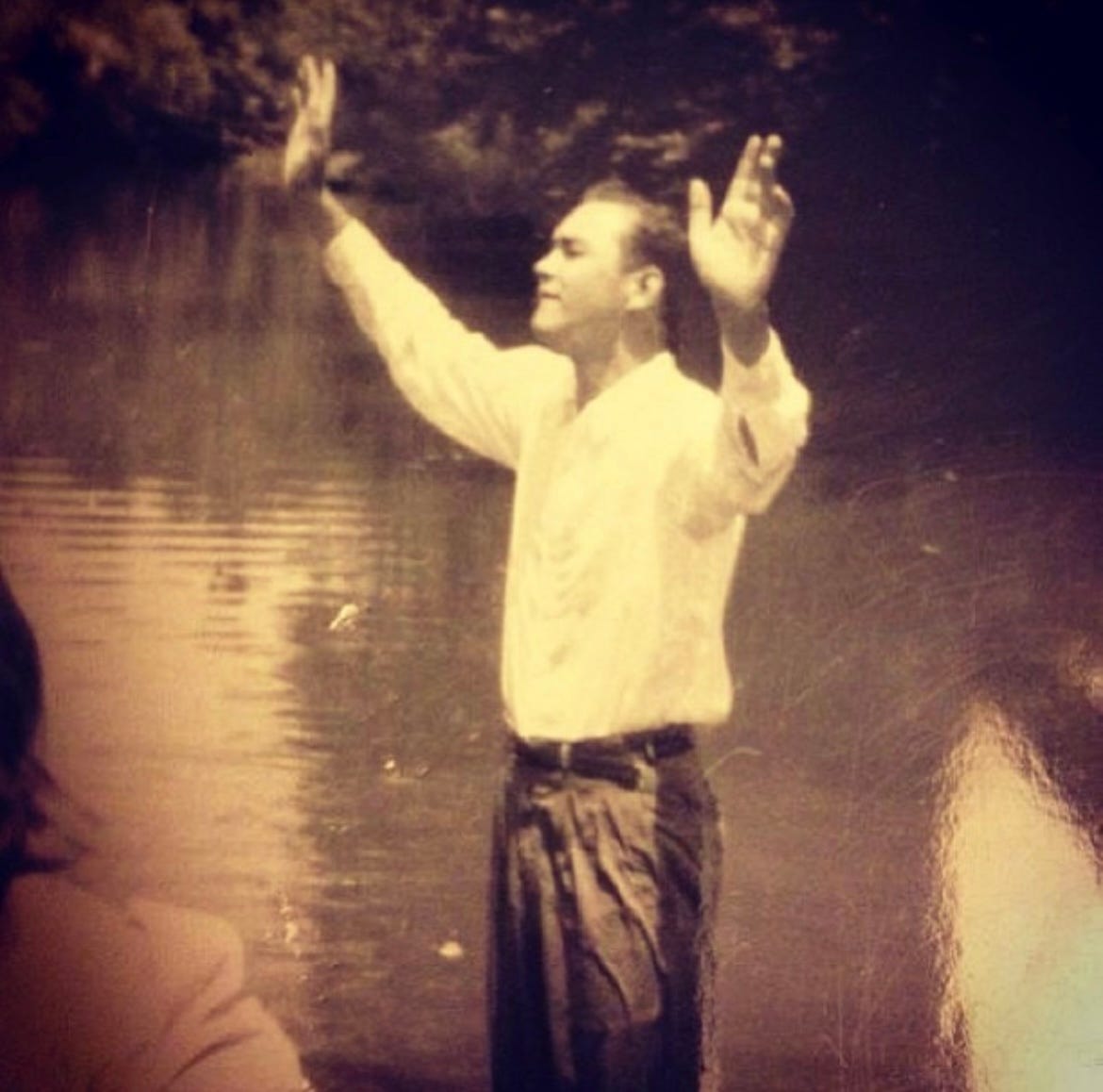
At district events, men would "prophesy" to him that he would be healed, yet healing never came. Years passed and his condition worsened. During this time he never missed Church, often having to crawl up the steps to enter the house of God and preach with a puke bucket by his side. His sons would bring his reclining chair back and forth from his home to the Church to make him as comfortable as possible. The prophecies subtly changed from "You will be healed" to "If you would just have faith, you will be healed." People who knew my Grandfather at the time would testify that there was something like a thick cloud of depression that began to engulf him during this time. Cancer couldn’t break his great faith, but foolish, lying prophets were taking their toll. Sometime later, a dear friend of his, Bro Clifford Readout, was praying and received a word from God. God told him to go tell my Grandfather that he would not be healed. That he would die and that his death was to show God's people how to die in victory. Can you imagine? What would you do if God gave you such a word to deliver to your best friend? Could you do it? Bro Readout didn't want to and wrestled with God and agonized over it. Finally, he called a friend and asked him to go with him to deliver the word from God for my Grandfather. When they arrived, they found him sitting in his reclining chair, so weak he could barely lift his hands. They sat down and began to make small talk. After some time, Bro Readout found the courage to tell his friend what God had sent him to say.
"Bro Odum," Bro Readout said, "God has given me a word for you." Weakly came the reply, "I know." With tears in his eyes, Bro Readout delivered the word from God. No healing was coming. My Grandpa was going to die. What happened next shocked Bro Readout and his friend, and stirs me to this day. My Grandfather threw up his hands and began to praise God and worship him with joy and excitement. Bro Readout didn't understand the reaction, and when my Grandfather finished, Bro Readout asked him what made him respond in such a way to such horrible news. My Grandfather looked him in the eyes and said, "Bro Readout, you are the first man who has not condemned me for lack of faith but has just informed me that I am pleasing to God." Less than a year later, he passed away as a man of great faith. Can you see, dear reader, what is on the line when we misunderstand faith? How many have had their faith destroyed by men who lied to them about the nature of faith? How many died believing they were lost because they "didn't have enough faith to be healed"? Would to God that every lying prophet would be chained to the gravestones of their victims.
What faith is:
Now that we've clarified what faith is not and the peril of misunderstanding it let's delve into the correct understanding of faith. Many refer to Hebrews 11 for a definition of faith, but while Hebrews 11 describes faith as substance and evidence, it does not define it in its essence. For a definition of faith, we turn to 2 Peter 1:1-5. Here, Peter defines faith as knowledge of and belief in Jesus Christ. Therefore, faith, biblically defined, is knowledge of and belief in the following:
Who Jesus is: He is the one almighty God, and beside him, there is no other—all the fullness of the Godhead dwells in Him.
What Jesus accomplished: His death, burial, and resurrection.
If faith is knowledge + belief, active faith is trust + obedience. A person can "grow" in faith by "adding" to their knowledge of Jesus greater knowledge of Him through prayer and study of His revealed word. We can walk "by faith" by allowing our knowledge of Jesus to dictate the direction of our lives and influence how we see and interpret the world around us. To walk by faith is to live what we believe. When we worship in faith, we are not attempting to manipulate or control God; we worship because we know Him, love Him, and want to glorify Him. When we pray in faith, we are praying with our knowledge of who Jesus is and what He is capable of, that He loves us, and that He is willing and able to work on our behalf.
While Hebrews 11 does not define faith, it does give us a list of people who walked by faith, and because of this, it is commonly referred to as "the hall of faith." The one thing each individual listed has in common is faith: that is, they knew the one true God, trusted Him and sought to live in obedience to His will. Hebrews 11 teaches us what it looks like to be people of faith. By faith, we can offer up sacrifices pleasing to God like righteous Abel and testify with Enoch that we "pleased God." By faith, we can preach and prepare for the judgment of God that is coming to the world and, at the same time, endure the scorn and mocking of the unbelieving world. We can read further and continue to be encouraged and inspired by the lives and experiences of men and women of God who walked by faith. Tragically, we often stop short of reading the entire chapter, contributing to our misunderstanding of living by faith. Yes, it includes kingdoms being subdued, righteousness being wrought, and promises being obtained, but it also includes the story of those who walked by faith and yet were tortured for their faith without deliverance. Others bore mocking and scourgings and imprisonment. Others still were stoned, sawn asunder, tempted, slain with the sword, destitute, afflicted, tormented. All walked by faith even though they didn't receive their promise. These are the unpreached heroes of faith, but they are heroes of faith indeed. Faith does not cause God to act; faith is how we know what God is capable of and enables us to trust whatever outcome He decides is best. Sometimes, God chooses to heal and deliver; sometimes, He chooses not to; faith doesn't determine which He chooses, but it does determine how we handle which path he chooses.
Who among us then has great faith? Bro Odum did and walked by faith to the grave, trusting in a God who could heal but was choosing not to, knowing that death is not the end but only the beginning. The precious saint of God who has been trusting God for years for healing that hasn't come and may never come has great faith. The believer who stands firm and refuses to compromise in an hour when compromise comes easy and frequently has great faith. The Pastor who is laboring selflessly and faithfully in a small Church where no one knows his name is a man of great faith. You and I can have great faith as well. Let us grow in faith by endeavoring daily to connect with God, study His word, and trust Him with the future.
Wow, this was an amazing read. Very helpful and very inspiring. Thank you so much for what you do.